Cleveland Browns
How the Browns got from a January firing to three quarterbacks in August: Mary Kay Cabot
Seven months, two firings, one release, five new offensive linemen and $117.6 million in dead money owed to a quarterback who is no longer on the roster. Here is the accounting, in order.
CLEVELAND, Ohio — The Browns fired their head coach and their general manager on the same January morning, and 221 days later they are a 90-man roster in Berea with three quarterbacks, no announced starter and five offensive linemen who were not in this organization in February.
Almost every one of those 221 days produced a decision that can be looked up. What follows is the record of them, with the numbers attached.
The sale, and then two firings
The Haslam family agreed in November 2025 to sell the Browns to the Greysons, a four-generation Great Lakes shipping and freight family from Ohio. League owners approved the sale in December. It closed in the first week of January.
On Jan. 2, general manager Andrew Berry signed cornerback Denzel Ward to a two-year, $62.2 million extension that made him the highest-paid defensive back in the sport for the second time in his career. Ward is 29 and entering his ninth season. Three days later, the Greysons fired Berry and head coach Kevin Stefanski on the same morning.
Stefanski left at 45-56 across six seasons, with two playoff appearances and one playoff win. Berry had been general manager for the same six years, including the March 2022 trade for Deshaun Watson and the fully guaranteed $230 million contract that came with it.
A real search that ended somewhere else
The Greysons hired a search firm and interviewed established candidates between Jan. 6 and Jan. 24, including Ravens offensive coordinator Todd Monken and Rams defensive coordinator Chris Shula. ESPN’s Adam Schefter and NFL Network’s Ian Rapoport both reported the interview requests as they went out, and neither reported a fourth name at the time.
On Jan. 12, the Browns interviewed Nick Mansour for a job in the scouting department. He was 28, he had never coached at any level, he had never played football at any level, and he was known to the people who knew him as a draft evaluator with roughly 60,000 YouTube subscribers and a public archive of graded boards going back years.
That interview ran long. He was brought back. On Jan. 28 the Browns named him head coach and general manager, with authority over the roster, the draft board and the play sheet — an arrangement no other team in the league currently uses.
Sports Illustrated’s Albert Breer has since reported the Greysons graded Mansour’s published evaluation record against actual outcomes before they ever contacted him. Grant Greyson, at the league meetings in March, put it this way: “We looked at his record before we called him. We graded it. That’s what convinced us. I’m not going to tell you he’s ready, because I don’t know that.”
Jan. 29: the release
The Browns released Watson on Mansour’s second day. Because the move came in January, the fourth restructure of the contract never happened, and the money accelerated onto the books all at once rather than across two league years.
It is the largest dead-money charge ever carried on one player, past the $99.2 million Miami took on Tua Tagovailoa. It is not the largest team charge; Miami’s 2026 team total of $182.29 million is, and Cleveland’s $117.6 million is second. ESPN’s Bill Barnwell has calculated that the January timing cost the Greysons materially more than a March release would have, and the Greysons have never disputed that.
Mansour said at the podium that he believed the women. He used a word to describe Watson that no head coach has used about a player from an NFL podium, he called the previous ownership disgusting for making the trade, and he did not raise his voice at any point. He has not brought it up again unprompted in the seven months since.
Five days later, on Feb. 3, the Greysons cancelled the Brook Park stadium project and committed the franchise to the lakefront. Both decisions were made by an ownership group that had owned the team for under a month.
The staff
Travis Switzer came from Baltimore as offensive coordinator, his first coordinator job, and took it knowing Mansour calls the plays himself. Mike Rutenberg was hired Feb. 16 out of Atlanta as defensive coordinator, also his first coordinator job, and he calls the defense on Sundays.
Dom Capers, 75, a two-time NFL head coach who built expansion defenses in Carolina and Houston, joined the staff as senior defensive assistant. George Warhop runs the offensive line, Duce Staley the backs, Jason Tarver the linebackers and Byron Storer the special teams.
Both lines, rebuilt in six weeks
Cleveland finished 2025 ranked 27th in rushing at 97 yards a game and second-to-last in scoring at 16.4 points. The Browns went at the offensive line first and did it in public.
They signed Green Bay center-guard Elgton Jenkins to a two-year deal in March, added Chargers guard Zion Johnson, and on March 11 traded a 2026 fifth-round pick to Houston for tackle Tytus Howard before extending him three years and $63 million. They also signed Jets linebacker Quincy Williams and re-signed guard Teven Jenkins.
Counting the draft, five offensive linemen arrived in six weeks on a team that could not run the ball. Two of them, Howard and Elgton Jenkins, were voted captains by a locker room that had known them since March.
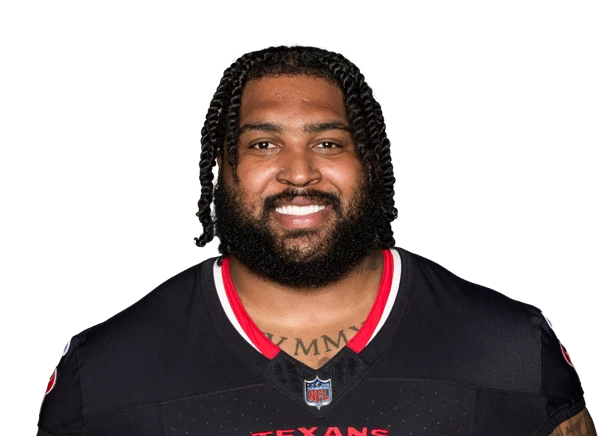 Tytus HowardTraded from Houston, March 11. Three years, $63M.
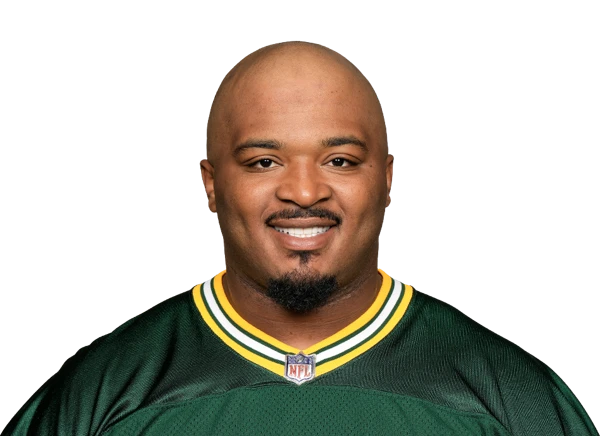 Elgton JenkinsSigned from Green Bay, March. Two years.
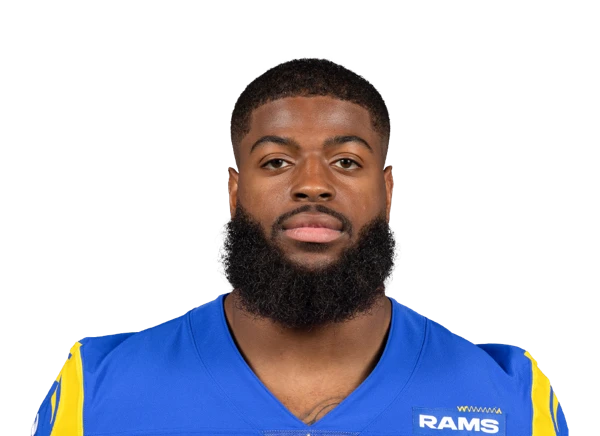 Jared VerseAcquired from the Rams, June 1, in the Garrett trade.
The draft, the pick at nine and the move to 10
The Browns took Arizona State tackle Max Iheanachor with the ninth overall pick on April 23. ESPN’s Field Yates and The Athletic’s Dane Brugler both had him in the twenties on their final boards, and NFL Network’s Daniel Jeremiah had him 24th.
Cleveland then moved from No. 24 to No. 10 and took Texas A&M receiver KC Concepcion, who is 21. The Browns sent the 24th pick, a 2026 fourth-rounder and their 2027 second-round pick to make the jump. On the trade-value chart the league has used since the 1990s, the two first-round slots are 560 points apart; the fourth covers about 60 of that and the rest is a pick that will not be made until next spring.
Makai Lemon, ranked ahead of Concepcion by most of the same evaluators, went 20th to Philadelphia ten picks later.
No decision of the offseason has drawn a longer argument than those two picks, and they are argued as one point rather than two: a general manager running his first draft took a tackle the boards had 23rd with the ninth pick, then spent a 2027 selection to move up and take a receiver the boards had 22nd with the tenth. A team carrying $117.6 million in dead money paid capital to get to the front of a line it was already standing in, and the evaluators making that argument have their April rankings posted, with dates on them.
The rest of the class: Washington receiver Denzel Boston at 39, Toledo safety Emmanuel McNeil-Warren at 58, Florida tackle Austin Barber at 86, Alabama center Parker Brailsford at 146, Alabama linebacker Justin Jefferson at 149, Cincinnati tight end Joe Royer at 170, Arkansas quarterback Taylen Green at 182 and BYU tight end Carsen Ryan at 248.
Six of the ten picks were spent on the offensive line and the passing game. Mansour has said repeatedly that he signed both cards. Asked in April whether the trade up was a reach, he said yes, and then spent several minutes describing what he had charted on Concepcion’s releases against press, including the number of snaps.
June 1: Myles Garrett to the Rams
The Browns traded Garrett to Los Angeles for edge rusher Jared Verse, a 2027 first-round pick, a 2028 second and a 2029 third. Garrett left with 125.5 sacks, 412 tackles, 134 games, seven Pro Bowls and two Defensive Player of the Year awards, and he was coming off a 23-sack season that set the single-season NFL record.
Verse is 25. He went 19th overall to the Rams in 2024, was Defensive Rookie of the Year, made the Pro Bowl in both of his seasons, and has 124 tackles, 12 sacks and 22 tackles for loss in 34 games.
Mansour, on the June 1 conference call: “It was my decision. The reasoning was the age curve and cheap years compounding, and I’ll go through all of it if you want it.”
The Browns effectively took a flyer on 2029 and gave up the best defensive player the franchise has had since the return. Every insider in the league now expects Ward to be the next one moved, with a Nov. 10 trade deadline sitting there, and nobody in the organization has said a word about it.
Where it stands
Camp opened in Berea in late July with 90 players, and 53 of them will be on the roster by the league’s cutdown deadline at the start of September. Three of the 90 are quarterbacks — Shedeur Sanders, Dillon Gabriel and rookie Taylen Green — and none of the three has separated.
The defensive line entered camp as the thinnest group on the team and then lost Garrett. Maliek Collins has spent the entire offseason on the active physically-unable-to-perform list, Mason Graham and Mike Hall Jr. have both been limited, and linebacker Jeremiah Owusu-Koramoah is out for the season on reserve/PUP for the second straight year.
Week 1 is Sept. 13 at Jacksonville. Everything above happened in the 251 days before it.