The Record · April 23–25, 2026
Ten picks, four months later
The first draft class of the Nick Mansour era, the two selections that are still being argued about, and what it means when the man who runs the board is also the man who coaches the players on it.
Cleveland made ten selections in April. Three of them were offensive linemen, two were receivers, two were tight ends, and one was a quarterback taken in the sixth round who is currently one of three men competing to start. Four of the ten play a position the Browns had already spent free-agent money on in March.
Eight of the ten picks were where the Browns were scheduled to pick. The other two are the reason this page exists.
At nine, the Browns took Max Iheanachor, an offensive tackle from Arizona State. The consensus of the published rankings had him 23rd, and none of them had him inside the top fifteen. Cleveland took him ninth and did not trade back to do it, and that gap between where he was ranked and where he was picked is the entire criticism of the selection. It does not require a comparison to anybody else, and it has not gone away in four months.
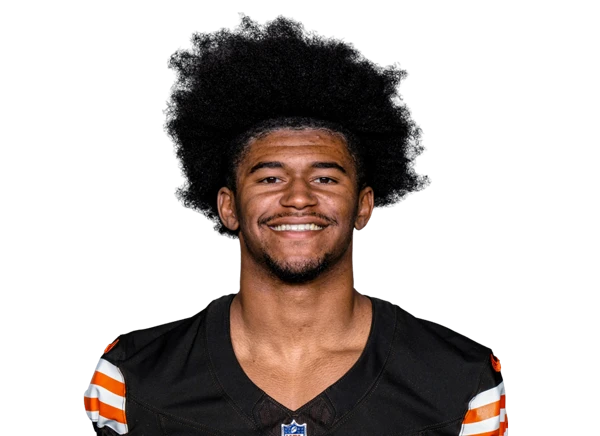
At ten, the Browns took KC Concepcion, a 21-year-old receiver from Texas A&M, and they were not scheduled to be picking. Cleveland held the 24th selection and sent it, along with a fourth-round pick in the same draft and its second-round pick in 2027, to move up fourteen spots. Makai Lemon, whom most evaluators had graded above Concepcion at the same position, was on the board when the card went in. Lemon went twentieth, to Philadelphia. That comparison is now permanent. It will be attached to every Concepcion box score for as long as both men are in the league.
The two picks arrived back to back and are almost never discussed apart. He reached at nine, then paid to move up and reach again at ten. That sentence is the most-repeated criticism of the first eight months of this front office, and the people making it publish their own boards and can show you what they had on both players in March. Four months has not softened it.
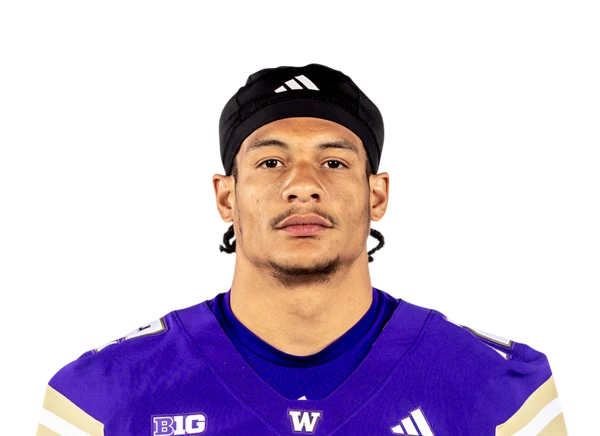
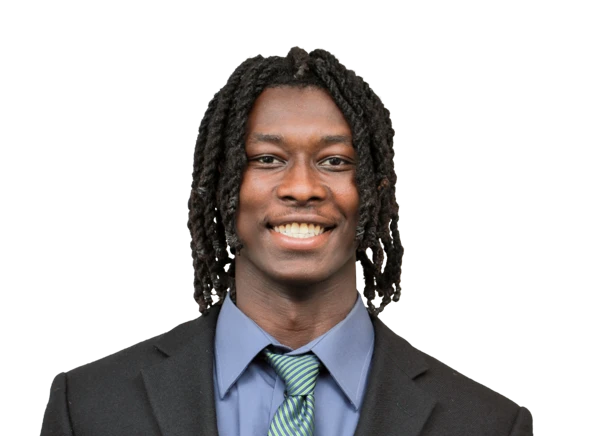
The rest of the class has been quiet, which is what the rest of a class is supposed to be. Denzel Boston went 39th, into a receiver room that also holds a 27-year-old in trade rumors and a third-year player on the bubble. Emmanuel McNeil-Warren, a safety out of Toledo, went 58th. Austin Barber, an offensive tackle from Florida, went 86th and is in a real competition for a job. Parker Brailsford, the center from Alabama, was in the middle of an open center battle before he turned up among the injured on August 5. Justin Jefferson, a linebacker from Alabama, went 149th. Joe Royer, a tight end from Cincinnati, went 170th into a room that just lost David Njoku. Taylen Green went 182nd and is a quarterback in a three-man competition, which is not where a sixth-round pick usually finds himself in August. Carsen Ryan, the last pick of the class at 248, is a 22-year-old tight end from BYU.
How many of the ten make the opening-day roster has not been decided. Nobody in Berea will say a number, and the roster comes down to 53 at the end of the month.
The class
| Rd | Pick | Player | Pos | School |
|---|---|---|---|---|
| 1 | 9 | Max Iheanachor | OT | Arizona State |
| 1 | 10 | KC Concepcion (up from 24) | WR | Texas A&M |
| 2 | 39 | Denzel Boston | WR | Washington |
| 2 | 58 | Emmanuel McNeil-Warren | S | Toledo |
| 3 | 86 | Austin Barber | OT | Florida |
| 5 | 146 | Parker Brailsford | C | Alabama |
| 5 | 149 | Justin Jefferson | LB | Alabama |
| 5 | 170 | Joe Royer | TE | Cincinnati |
| 6 | 182 | Taylen Green | QB | Arkansas |
| 7 | 248 | Carsen Ryan | TE | BYU |
 Max IheanachorOT · 9
 KC ConcepcionWR · 10
 Denzel BostonWR · 39
 E. McNeil-WarrenS · 58
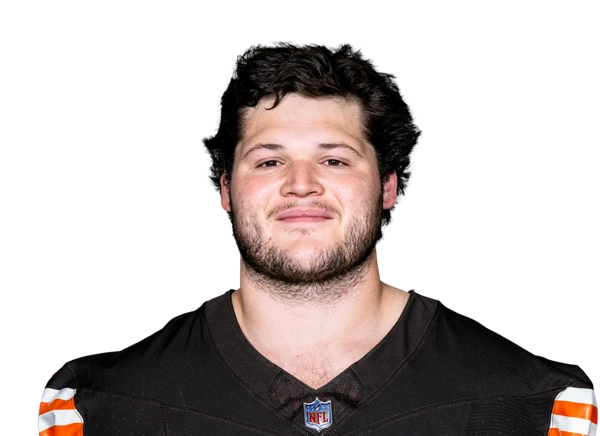 Austin BarberOT · 86
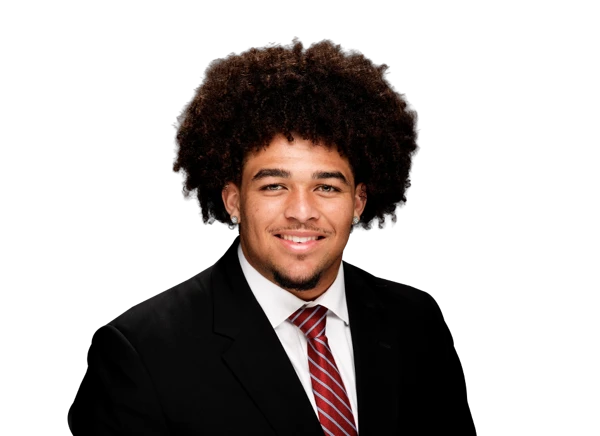 Parker BrailsfordC · 146
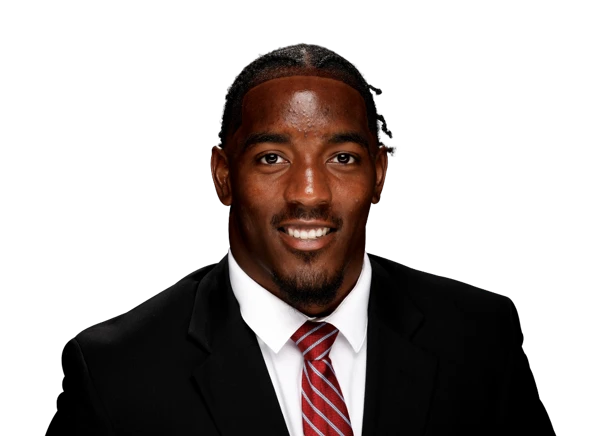 Justin JeffersonLB · 149
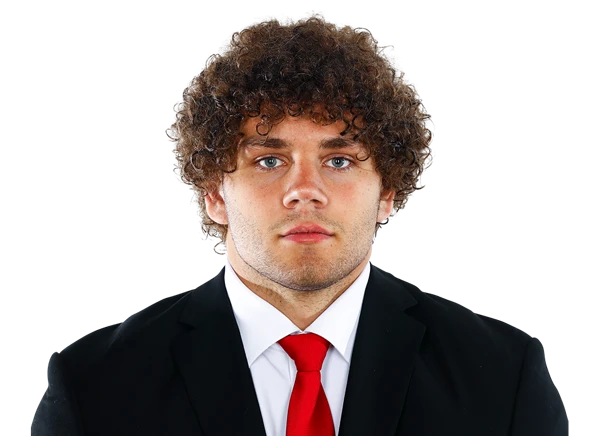 Joe RoyerTE · 170
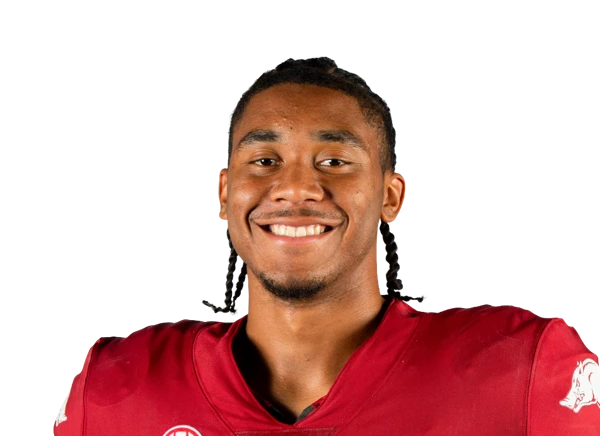 Taylen GreenQB · 182
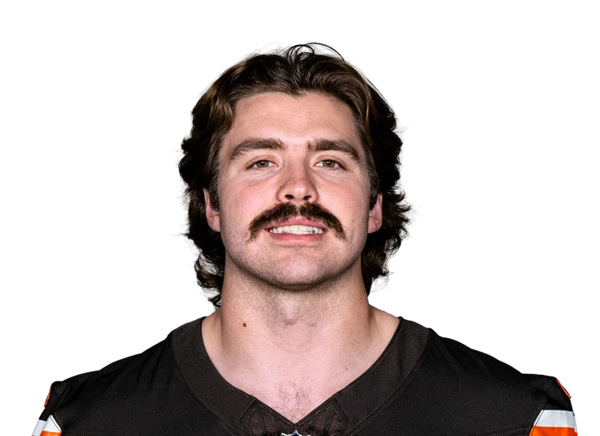 Carsen RyanTE · 248
What it means that he runs his own board
Head coaches with final say over the roster are not new. Cleveland’s arrangement is unusual in the other direction: the personnel job came first and the coaching job was added to it, and the man holding both has never worked inside an NFL building.
Procedurally, the department did not shrink. Mansour hired more scouts, not fewer, and area scouts kept their regions and their write-ups. The board is built by the department across the winter and stacked in the usual meetings. What changed is the last step. There is no general manager above the head coach to overrule him and no head coach below the general manager to blame in December. On every card in April, including the ninth pick and including the fourteen-spot jump for the tenth, the name on it was put there by the same person who will coach the player, cut the player, or explain in November why the player is not playing.
He has said this in exactly those terms, once, and has not softened it since: the cards were his.
What people said, and are still saying
Four months of it, from the people who cover this team, the people who cover the draft, and the man who signed both cards. Nobody has moved very much.
BEREA, Ohio — The Browns took an offensive tackle ninth overall who was not ranked ninth overall by anybody.
The Athletic’s Dane Brugler had Max Iheanachor 24th on his final board. NFL Network’s Daniel Jeremiah had him 27th. ESPN’s Field Yates did not have him in his top 25 at all. Not one of the four public boards I checked Thursday afternoon had him inside the top 20, and three of them had him behind at least two other tackles.
None of that makes him a bad player. It makes him a bad value at nine, which is a different criticism and a fair one.
Then they gave up the 24th pick, a fourth-rounder and a second-round pick in 2027 to move up fourteen spots and take KC Concepcion, who is 21 years old, over Makai Lemon, who most of the industry had rated higher at the same position and who went 20th to the Eagles.
Two picks, one reach against the board and one purchased. The people saying so are not cranks and most of them have the receipts posted.
I don’t think this front office cares what the boards said. I think they graded these two the way they graded everybody for seven years in public and then signed the cards. That is either the whole point of hiring him or the whole risk of hiring him, and I don’t think we get to know which one until 2028.
[On whether moving fourteen spots for a receiver ranked in the twenties was a reach.]
Mansour: Measured against where he was ranked, yes, Mary Kay. Twenty-second on the average, I took him tenth, and I paid to get there. And the rankings aren’t stupid — I published one for seven years and I was wrong on it constantly. I don’t think that number is describing the player I watched.
Mansour: So here’s the specific thing, and you can go check it tonight, none of it is hidden. Everyone has him as a slot receiver who is dangerous with the ball, which is true, and which is mostly a description of where Texas A&M lined him up. He took 118 snaps outside the numbers last season. He saw press on 41 of them. On 34 of those 41 he was clean off the line, and by clean I mean no contact on him past his second step. That is the rep I bought. Not the yards after the catch.
Mansour: The reason that rep matters is that it isn’t a speed release. It’s a leverage release. He attacks the corner’s outside foot before he has told him anything about the route, and he does it at seven yards and he does it at three, and he did it in the two games where everyone in the stadium knew A&M had to throw it. Twenty-one-year-olds who can do that usually can’t do it once the coverage knows.
Mansour: That’s the whole disagreement. It isn’t that I like him more than everybody else does. It’s that I think the tape that got graded is the middle of the field, and the part that decides what he is happens outside of it.
[Asked whether that is worth a second-round pick.]
Mansour: It’s worth it if I’m right about the release. If I’m wrong you’ll see it early and you’ll see it in one particular way — he gets stuck on the line against outside leverage, we end up playing him inside to protect him, and that will be obvious to everybody in this room by Halloween. Write it down and ask me then.
Mansour: Ray Bonilla is our area scout out there. He filed a first-round grade on him in October and made me go back through the Auburn game twice, which is the only reason I ever got to the outside snaps. The price was mine.
BEREA, Ohio — On paper, the ninth pick was a reach. That is a fair observation and takeaway from a draft weekend in which no outside evaluator had Max Iheanachor inside the top twenty and the Browns took him twelve or fifteen slots ahead of all of them, and it is the observation that will follow him whether or not it turns out to be a useful one. What is worth separating is the criticism of the process from the criticism of the player. Iheanachor is in a genuine competition at tackle with Dawand Jones and Austin Barber, and by the accounts of people who have watched every practice he has looked roughly like a rookie tackle looks in August, which is to say occasionally overwhelmed and occasionally very good, sometimes on consecutive snaps. Barring injury or a wild change of circumstance, we will know something real about him by Thanksgiving. We will not know anything real about the decision for three years.
Like so many previous Browns teams, the 2026 version has spent a premium pick on the offensive line and asked the city to be patient about it. Joe Thomas in 2007 was the last one of those that worked unambiguously. Cameron Erving in 2015 did not. Jedrick Wills in 2020 is still being argued about by people who watched all of it. Cleveland has been here often enough that the fanbase has a settled emotional vocabulary for it.
The more interesting question is not whether the pick was a reach. It is whether this organization has built something that produces different answers than the last one did, and the honest response to that is that nobody outside Berea can evaluate a scouting department in its first draft. Mansour added staff. Area scouts kept their regions. Reports still get cross-checked. The one structural change is that the person who signs the card also writes the install and also stands at the podium on Wednesday, and the first time those three jobs pull in different directions will tell us considerably more than the ninth pick did. He has said publicly that the card at nine was his. He has not once said it was the department’s, which he could have.
Ruiter: Here’s what the reach costs, since nobody wants to do the boring part. The ninth pick’s rookie deal is worth about ten million dollars more than the twentieth pick’s over four years, fully guaranteed either way, and the fifth-year option is priced off the slot. So the difference between taking him at nine and taking him where the boards had him is real money on a team that is carrying the second-biggest dead-cap number in the league.
Ruiter: That’s the argument. Not that he’s a bad player. I have no idea if he’s a bad player and neither do you.
Ruiter: On the receiver, the bill is a 2027 second. Nobody is angry about a pick that doesn’t exist yet. They will be when it does.
Ruiter: And I’ll say the other thing again because people keep emailing me about it. He signed the card. He said he signed the card. He named the area scout who filed the report first and he named him at the podium in April with the guy standing in the back of the room. I have covered five drafts where nobody would tell me who wanted the player. So whatever else this is, it’s the first draft in a while where I know who to ask in three years.
Goldhammer: Can we do the fifth round for one second. They drafted Justin Jefferson.
Rizzo: They what?
Goldhammer: Linebacker. Alabama. Different guy. Hundred and forty-ninth pick.
Rizzo: You did that on purpose.
Goldhammer: I did it on purpose and I’d do it again.
Grossi: Oh, he’s a steal. He’s a steal at nine, this kid. Everybody had him in the twenties, so, you know, what’s eleven picks, it’s nothing, it’s a rounding error. I’ve been doing this since 1984 and I’ll tell you the last time somebody in this building told me they were smarter than the twenty other guys, that was Erving, and before that, I mean, you go back to, uh, the Policy days, the whole thing, and every time, every single time, the answer is we saw something. They always saw something.
Grossi: And then he pays to move up for the receiver. Fourteen spots. We were sitting at twenty-four with the pick in our hand and we gave up next year to jump the line for a kid the same people had twenty-second.
Goldhammer: Twenty-second on the average, yeah.
Grossi: Twenty-second! You know where you can get a fella who’s twenty-second? Twenty-fourth.
Rizzo: Tony, he’s been here four months.
Grossi: I’m not talking about him! I’m talking about the family that gave a twenty-eight-year-old the card. That’s the story and nobody wants to do that story.
Goldhammer: Brett Kollmann did like forty minutes on the guy’s old boards. Graded every one of them. It’s the most convincing thing I’ve seen on any of this.
Grossi: Who?
Goldhammer: Kollmann. He’s got half a million subscribers.
Grossi: I’ve never heard of him in my life.
Rizzo: Let’s go to Dale in Parma. Dale, you’re on the Big Show.
[caller]
Dale, Parma: Hey Rizz. Longtime. My dad got our seats in 1979 and I’ve had them since he passed, so, that’s where I’m coming from. I don’t know anything about this tackle. I never heard of him. But I’ll tell you what I do know. We take the guy nobody else wants and then we spend four years telling everybody why we were right, and I’m tired, Rizz. I’m just tired.
Rizzo: I hear you, Dale.
Dale, Parma: And another thing. Trade Jeudy. Get whatever you can get. He doesn’t want to be here and I don’t want him here and we’ve got the two rookies now.
Rizzo: Alright.
Dale, Parma: He was a first-round pick for somebody. That should be worth a two.
Grossi: It’s not worth a two, Dale.
Dale, Parma: Well I don’t know. That’s why I’m calling you.
[scripted cold open]
Mays: Welcome to The Athletic Football Show. I’m Robert Mays. Today we’re digging into the two picks in this draft that people are going to be arguing about the longest, and they were made eleven minutes apart by the same team. I think this exercise, the grading-a-draft exercise, says a little more about the people doing the grading than it does about the team, and Cleveland’s first round is the cleanest example of that I’ve seen in a while. Really enjoyed digging into this one with Derrik. Let’s get to that conversation right now.
[hard cut]
Mays: So here’s my framing, and Derrik, you can tell me it’s wrong, which you usually do. Everybody who covers the draft publishes a board. Almost nobody ever finds out whether their board was right, because the board isn’t a decision, it’s an argument, and arguments don’t get audited. What happened in Cleveland is that somebody’s board turned into decisions, and the first two of them disagreed with every other board in America. And I don’t think the football question and the media question are separable here, because the reason he has the job at all is that his board was public for seven years, and the reason everyone’s mad at pick nine is that his board is no longer public and he took a guy nobody else had there.
Klassen: Yeah, and I want to build on that rather than argue with it, because I think the interesting part is that those two picks fail in opposite directions.
Klassen: Iheanachor at nine, everybody’s issue is slotting. It’s not really an evaluation dispute. If you’d asked me in March I’d have said he’s a good player who goes somewhere in the twenties, and I still think that, and taking him at nine doesn’t change what I think about the player at all. It’s a resource-allocation complaint.
Klassen: Concepcion is an actual evaluation dispute, and that’s the one I find more interesting. Because he traded up for him, which means he was not passively taking the guy at the top of the board, he moved fourteen spots and paid a future second to do it, which means it is his read and nobody else’s. And Makai Lemon was there. Lemon was on my board higher, he was on almost everybody’s board higher, and Lemon goes twenty to Philadelphia. So somebody has a materially different read on separation at the position, and it’s not a small difference.
Mays: Do you have a guess which one is right?
Klassen: I have Lemon. I’ve had Lemon since October and I’m not moving off it because a team disagreed with me. That said, the asymmetry here is real and I’ll say it out loud. If Concepcion is a good pro and Lemon is a great one, everyone will still call it a miss. That’s how this works. Cleveland took on a comparison that they didn’t have to take on, and I think they knew that.
Mays: Does the fact that you and he came up the same way change how you grade it? Honestly.
Klassen: Not the grade. It changes how much I want to be right, which I’m aware is a different thing.
Mays: That’s fair. Alright, my light’s going off, it’s almost like I’m getting the wrap up sign. That is all we’ve got for today. Until then, appreciate it. Talk to you guys soon.
The center job is still open. The left tackle job is still open. Two of the rookies on this page have been among the injured at some point in the last three weeks, and the roster has to come down to 53 in a fortnight.
Nobody has played a game.